
Guide
What Helps with Tennis Elbow? Tips for Everyday Life, Work and Leisure
With tennis elbow, the most important thing is to relieve the irritated tendon attachment without completely immobilising your arm. These tips for everyday life, work and leisure show how this can be done.
4 min readUpdated on November 10, 2026

Contents
- 01Which movements put strain on the elbow
- 02In everyday life: reducing the strain
- 03At work: making your job easier on your arm
- 04Aids: pressure, counter-traction or wrist support
- 05Heat or cold: what helps?
- 06Massage: releasing tension in the forearm
- 07Stretching: gently, not into the pain
- 08When should you see a doctor?
- 09Frequently asked questions
Key points at a glance
- Relieve rather than immobilise: identify and reduce the movements that trigger the pain.
- Carry loads close to your body with both hands and use tools with thick handles.
- Cold tends to suit acute symptoms, warmth tends to suit tense muscles.
- Massage can release tension in the forearm; never stretch into the pain.
- If the symptoms persist, have them checked by a doctor.
Which movements put strain on the elbow
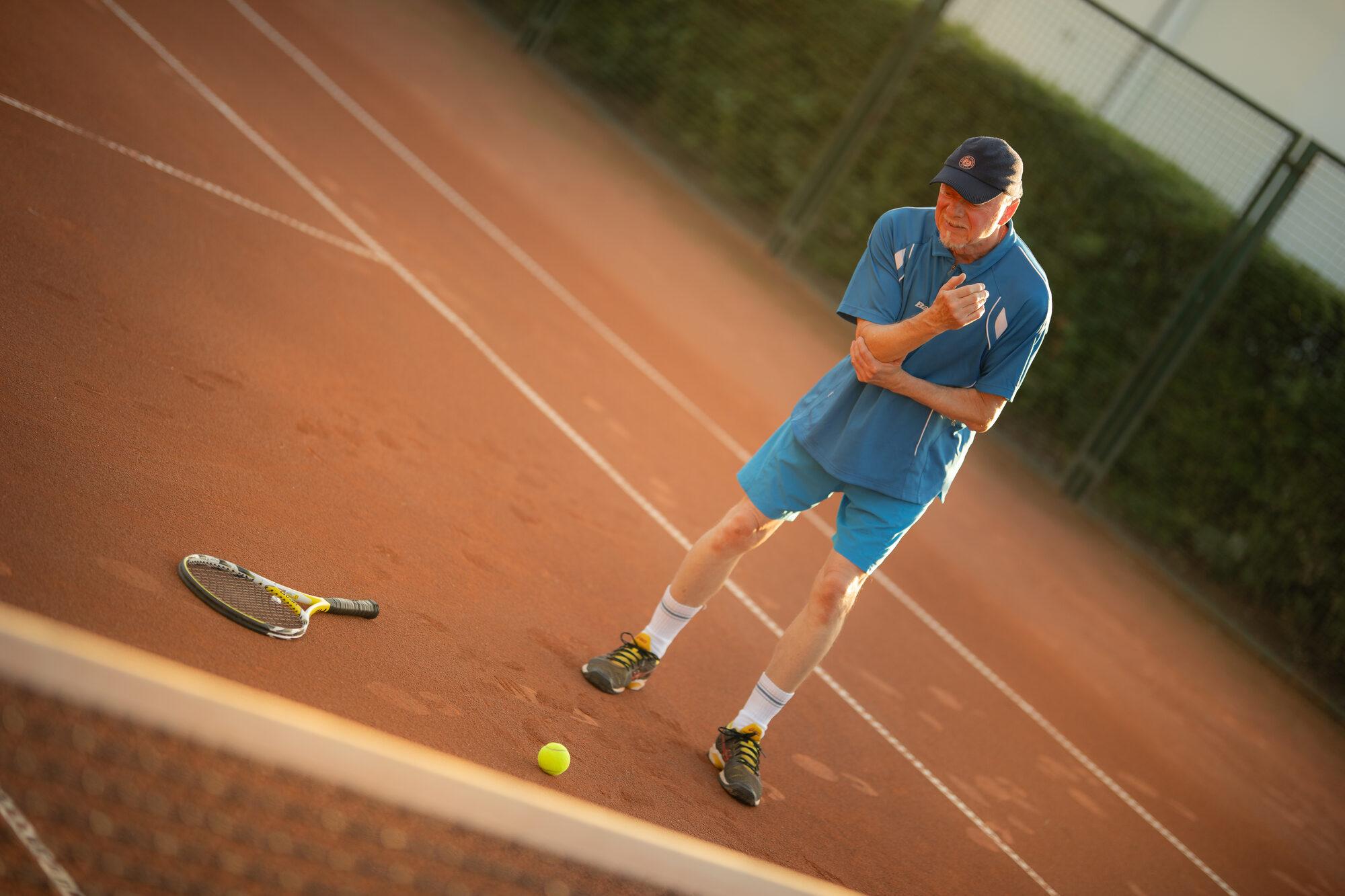
With tennis elbow, the muscles that extend the wrist and fingers pull at the outer tendon attachment – with golfer's elbow, the flexor muscles pull at the inner one. This pull is created every time you lift your hand or grip forcefully. If the attachment is already irritated, powerful movements with the arm straight are particularly painful.
Jerky movements, vibrations and overextension also put strain on the tendon attachments. If you know which movements trigger your symptoms, you can take targeted countermeasures.
In everyday life: reducing the strain
- Spread the load: split up heavy or repetitive tasks and take short breaks in between
- Carry close to your body: lift shopping and other loads with both hands and close to your body where possible
- Adapt the grips: tools and devices with thicker, well-padded handles make gripping easier
- House and garden: spread ironing, hedge trimming or cleaning over several short sessions
- Keep moving: use your arm as normally as possible, without overdoing it
At work: making your job easier on your arm
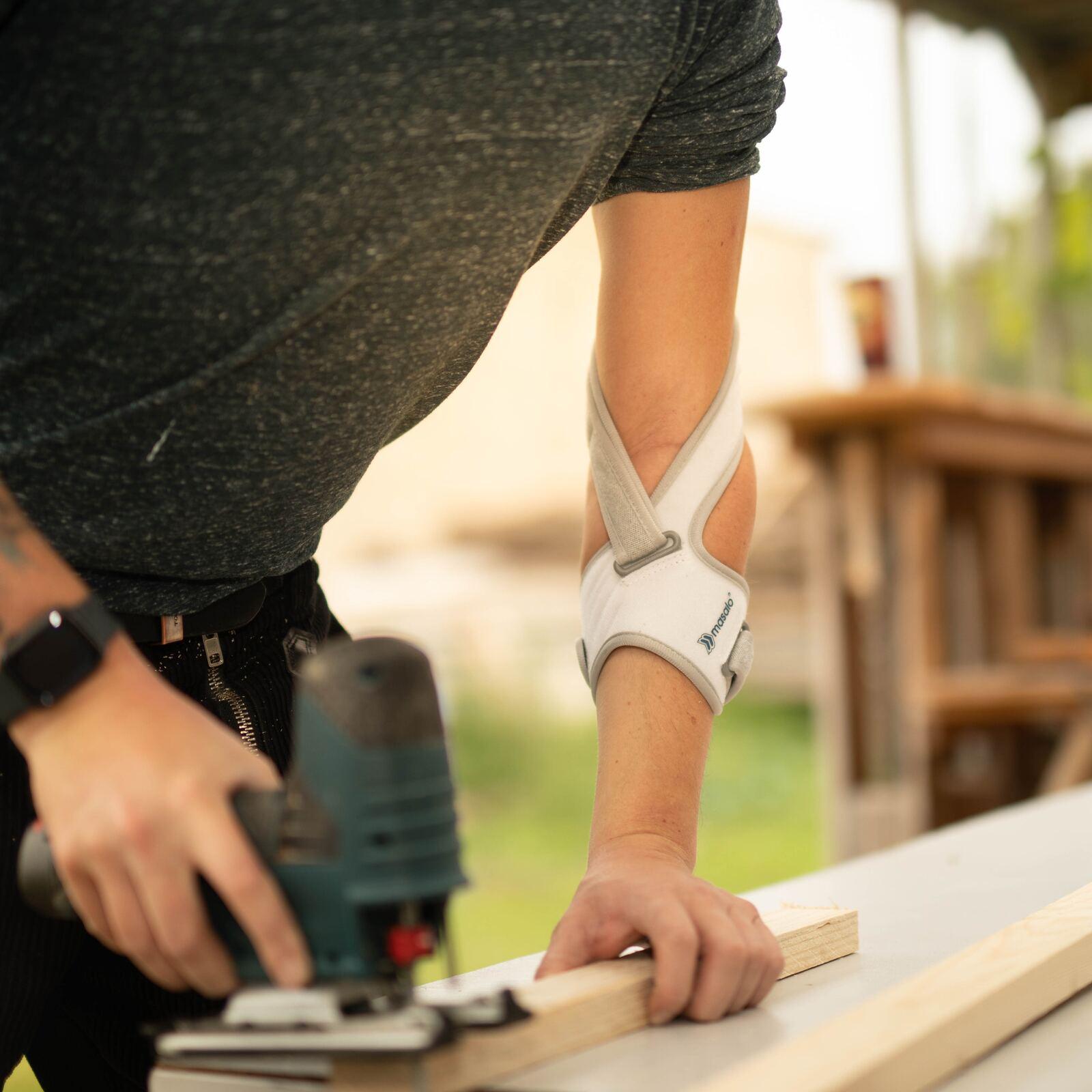
Work with screwdrivers, hammers, chisels or saws is particularly demanding, as are vibrating machines such as hammer drills and continuous fine motor work of the kind common in dental practices, at opticians or in podiatry. Such activities can rarely be avoided entirely – but they can often be made less stressful:
- Alternate activities and interrupt repetitive movements
- Choose tools with suitable, padded handles
- Stabilise the wrist with a support if necessary
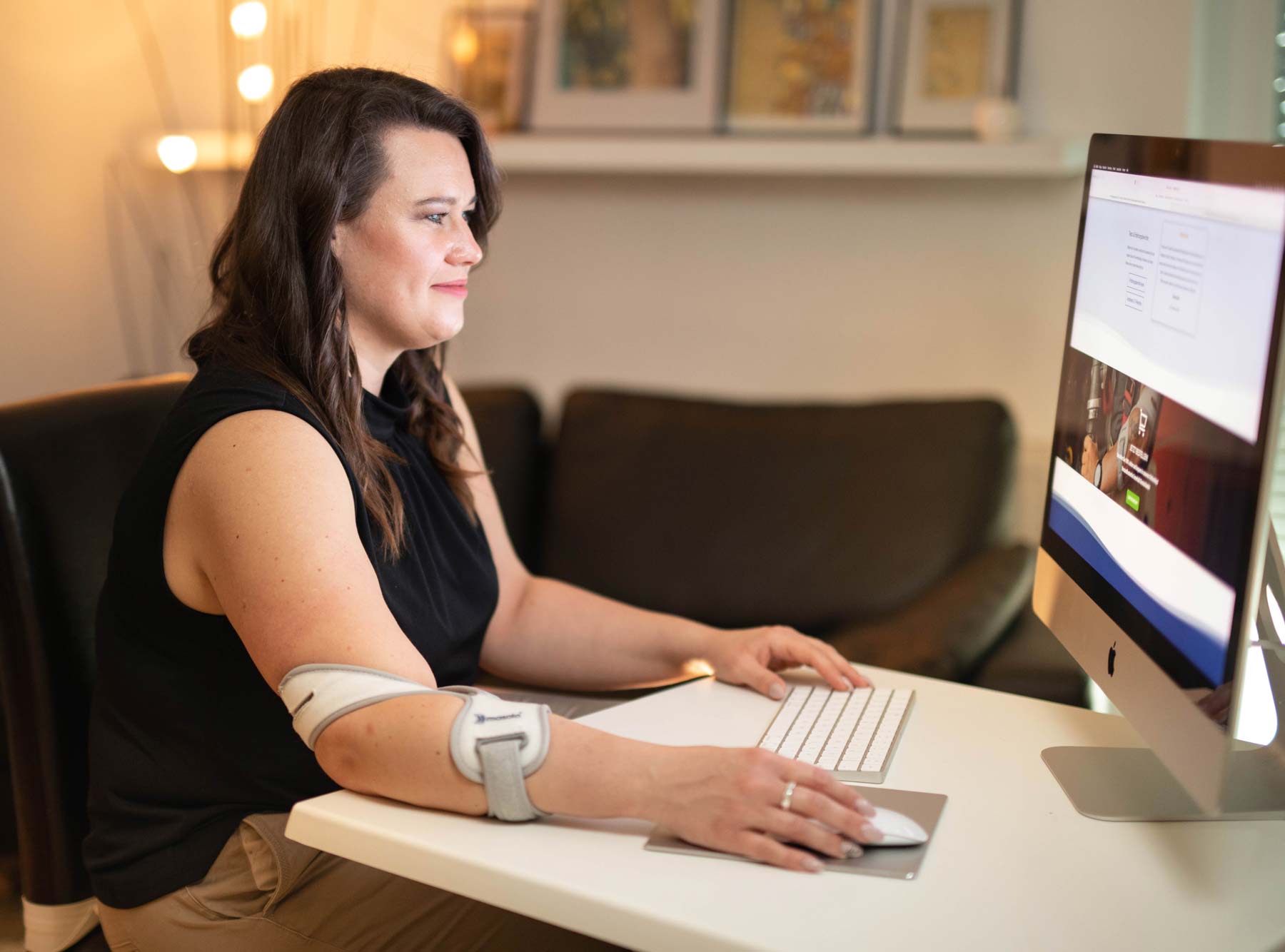
- Set up your mouse and keyboard ergonomically at your desk – you will find a checklist in the article on mouse arm
Aids: pressure, counter-traction or wrist support
Conventional epicondylitis clasps and supports work with compression: pressure on the muscles is intended to relieve the tendon attachments. The Masalo Cuff MED, by contrast, uses counter-traction, which is intended to redirect part of the pulling forces from the elbow to the upper arm – find out more under How it works.
In strength training, fitness gloves with wrist support provide additional stability.
Heat or cold: what helps?
Whether warmth or cold feels more pleasant varies from person to person. As a rough guide:
| Cold | Warmth | |
|---|---|---|
| More suitable | for acute, irritated symptoms | for tense forearm muscles |
| Examples | cool pack wrapped in a cloth, a cooling compress such as a cold quark wrap | wheat bag, warm towel |
| Bear in mind | never place anything cold directly on the skin | not on red, swollen or warm skin |
Please only use creams or gels after consulting your doctor or pharmacist and in accordance with the package leaflet.
Massage: releasing tension in the forearm
Many people affected unconsciously adopt a protective posture: the muscles tense up as a precaution because gripping threatens to cause pain. However, tense muscles pull harder on the tendons. Some people can feel these hardened areas as “little lumps” in the forearm.
The first port of call for this is physiotherapy. In addition, you can massage the area yourself, for example with a spiky massage ball or a foam roller: roll slowly from the wrist towards the elbow with noticeable but easily tolerable pressure. This can release tension and stimulate circulation.
Stretching: gently, not into the pain
- Do not stretch while your arm is acutely painful – this puts additional pull on the irritated attachment.
- Perform exercises slowly, never into the pain.
- Hanging from a bar for long periods also puts heavy strain on the tendon attachments.
- It is best to have a physiotherapist show you suitable exercises.
You can read how to adapt your training under Sport with tennis elbow. Once the symptoms subside, increase the load gradually to help prevent relapses.
When should you see a doctor?
- The symptoms do not improve after a few weeks despite reducing the strain.
- Your arm hurts even at rest, without strain – this may indicate inflammation.
- The pain spreads, for example towards the shoulder.
- The elbow is swollen, red or warm.
- New symptoms appear after stretching exercises, for example on the inner side of the elbow.