
How it works
The Counter-Traction Principle: How the Masalo Cuff Works for Tennis and Golfer's Elbow
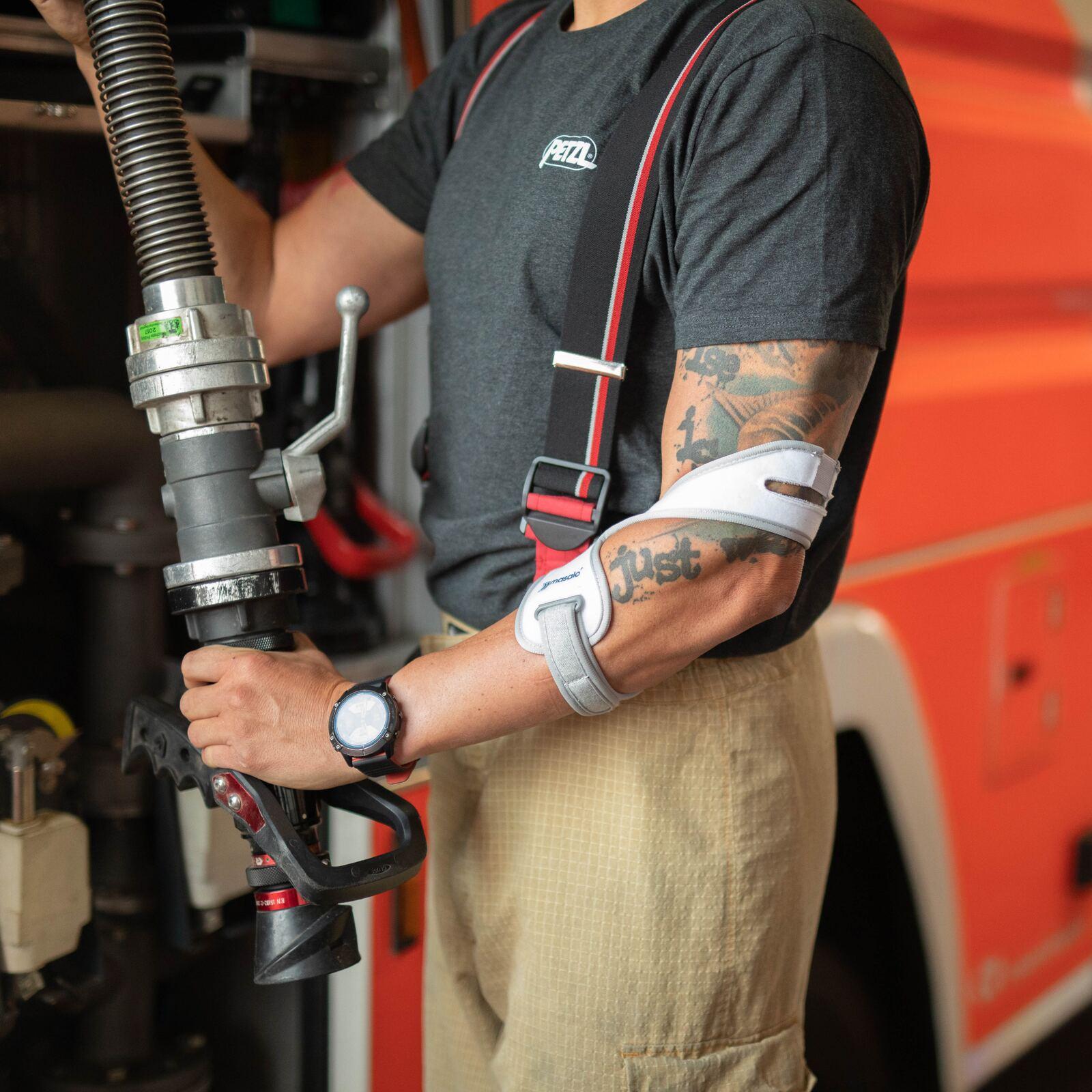
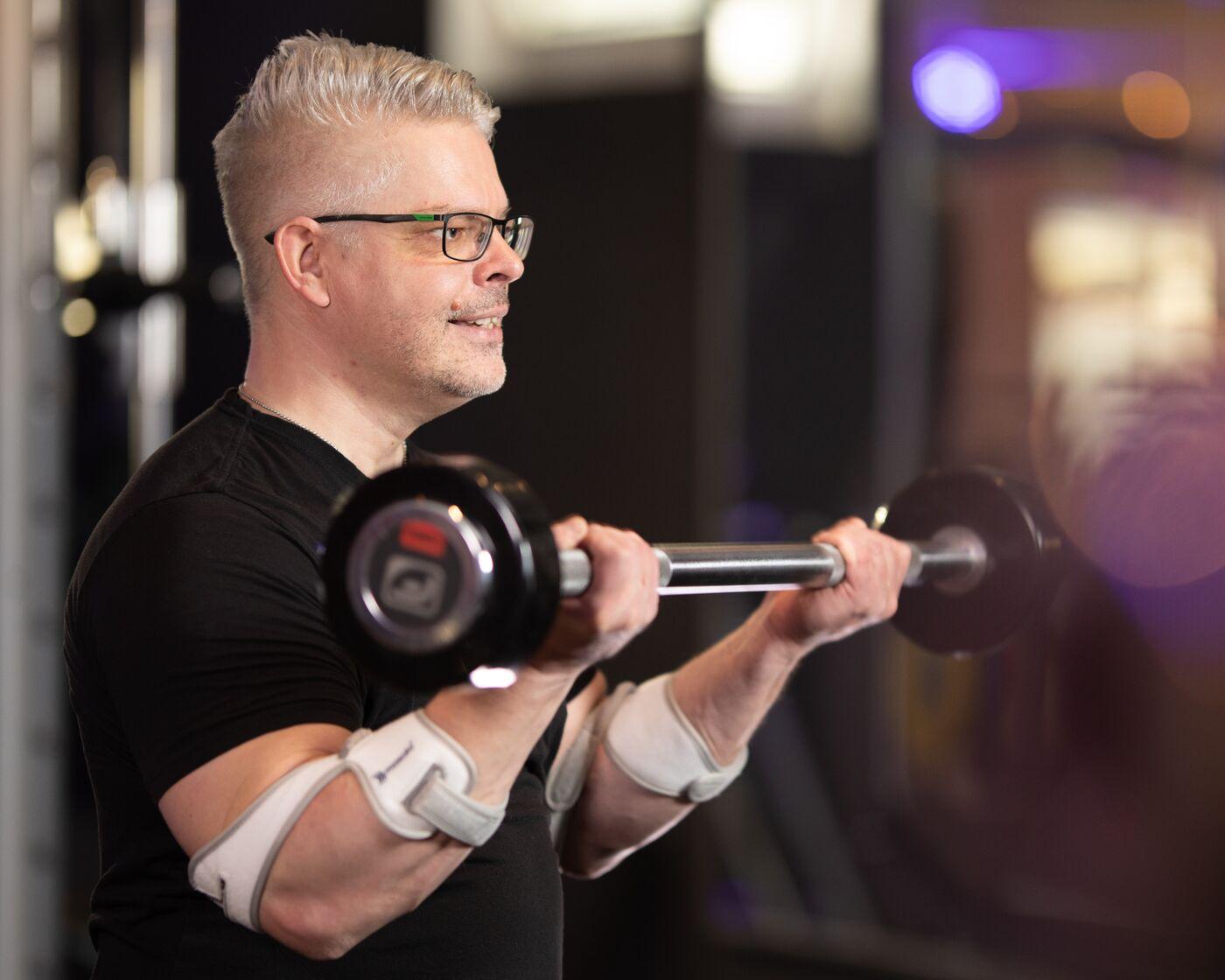
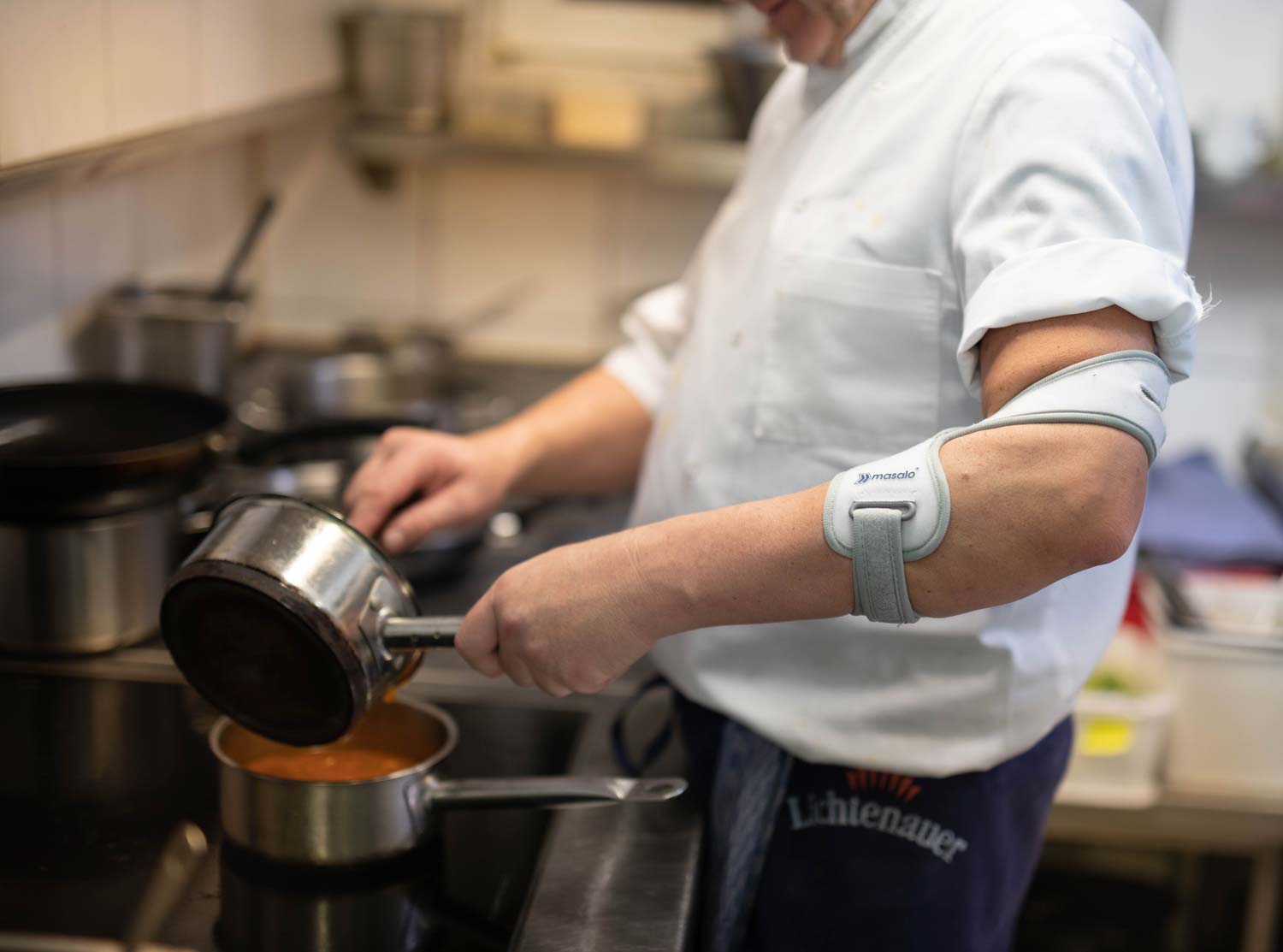
The Masalo Cuff MED is not your usual tennis elbow brace: it works with counter-traction rather than compression. The pulling forces that act on the tendon attachments in tennis elbow and golfer's elbow are absorbed by the forearm cuff and redirected to the upper-arm strap. Your arm remains mobile throughout.
Contents
Key points at a glance
- The cause is the pulling forces of the forearm flexor and extensor muscles at the tendon attachments at the elbow.
- The cuff creates counter-traction and redirects these forces to the upper-arm strap – the tendon attachments are relieved.
- No compression: circulation is maintained, and it can also be worn at night.
- The counter-traction comes into play whenever you move your arm, especially when you straighten it or put strain on it.
- A correct fit with the right adjustment is essential.
Where does the pain in tennis elbow come from?
The tendons of the forearm muscles attach at the epicondyles, small bony prominences at the elbow. Every movement of the arm and hand creates pulling forces – generated by the flexor and extensor muscles of the entire forearm, and especially strong when you bend or extend your hand. These pulling forces act on the tendon attachments and can cause micro-tears there, which can become inflamed – this is how epicondylitis develops.
Tennis elbow affects the outer side of the elbow, golfer's elbow the inner side. You can read more about causes and symptoms in our tennis elbow guide.
How does the counter-traction principle work?
Targeting the pulling forces
The cuff does not work with compression. Instead, it targets the pulling forces that act on the tendon attachments with every movement.
Creating counter-traction
When you move your arm, the cuff as a whole creates counter-traction: the forearm cuff and upper-arm strap are connected by a patented design and work against the pulling forces of the forearm muscles.
Redirecting the forces
The pulling forces are redirected to the upper-arm strap, and the tendon attachments are relieved. You can keep using your arm as normal.
What happens when you straighten and bend your arm?
With the cuff on, straightening your arm takes a little force – and that is exactly the moment the counter-traction comes into play. With every movement, the forearm muscles are also gently stretched towards the elbow, loosened and massaged.
If you bend your arm sharply, the pull eases off by itself, so circulation remains unimpeded. You decide how early the counter-traction sets in via the upper-arm strap: the tighter it is, the greater the relief.
Why does the cuff work without compression?
A typical tennis elbow brace or epicondylitis clasp works with compression, i.e. pressure on the forearm. Compression products should usually be worn for no more than six to eight hours at a time to avoid circulation problems. The Masalo Cuff does without compression and can therefore be worn continuously – including at night, during sport and at work. Many people know the idea of absorbing pulling forces through counter-traction from taping – the cuff implements it mechanically and can be readjusted at any time.
Both principles compared objectively: Epicondylitis clasp or support?
Only effective when fitted correctly
The principle only works if the cuff is positioned correctly. A good sign: when you straighten your arm, a small bulge forms between the forearm cuff and the elbow. Our fitting guide shows you how to put the cuff on. Which part does what is explained on the page about how the Masalo Cuff is constructed.
You can find out whether the cuff may be an option for your symptoms under Who is the Masalo Cuff suitable for?