
How it works
How the Masalo Cuff Is Constructed: What Each Part Does
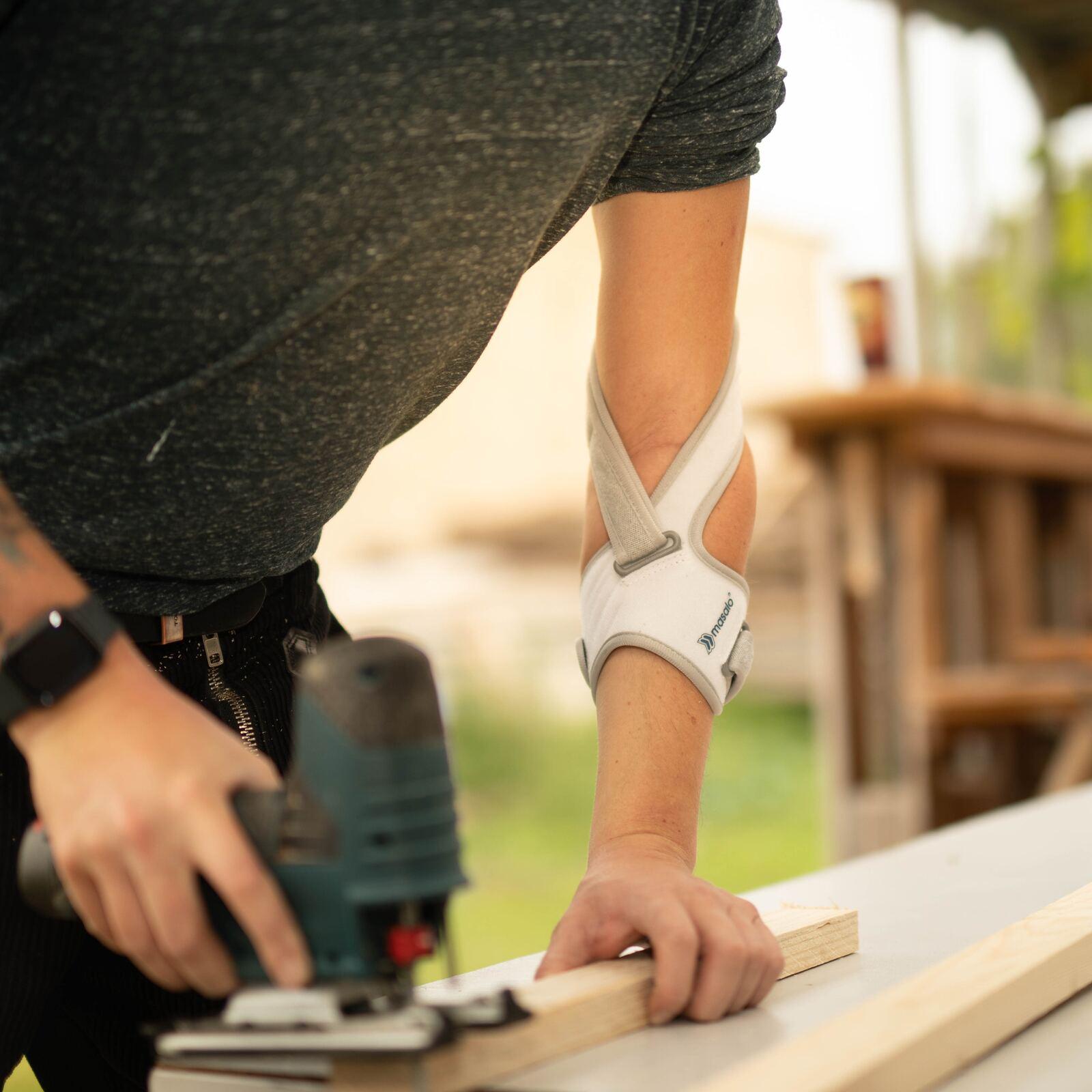
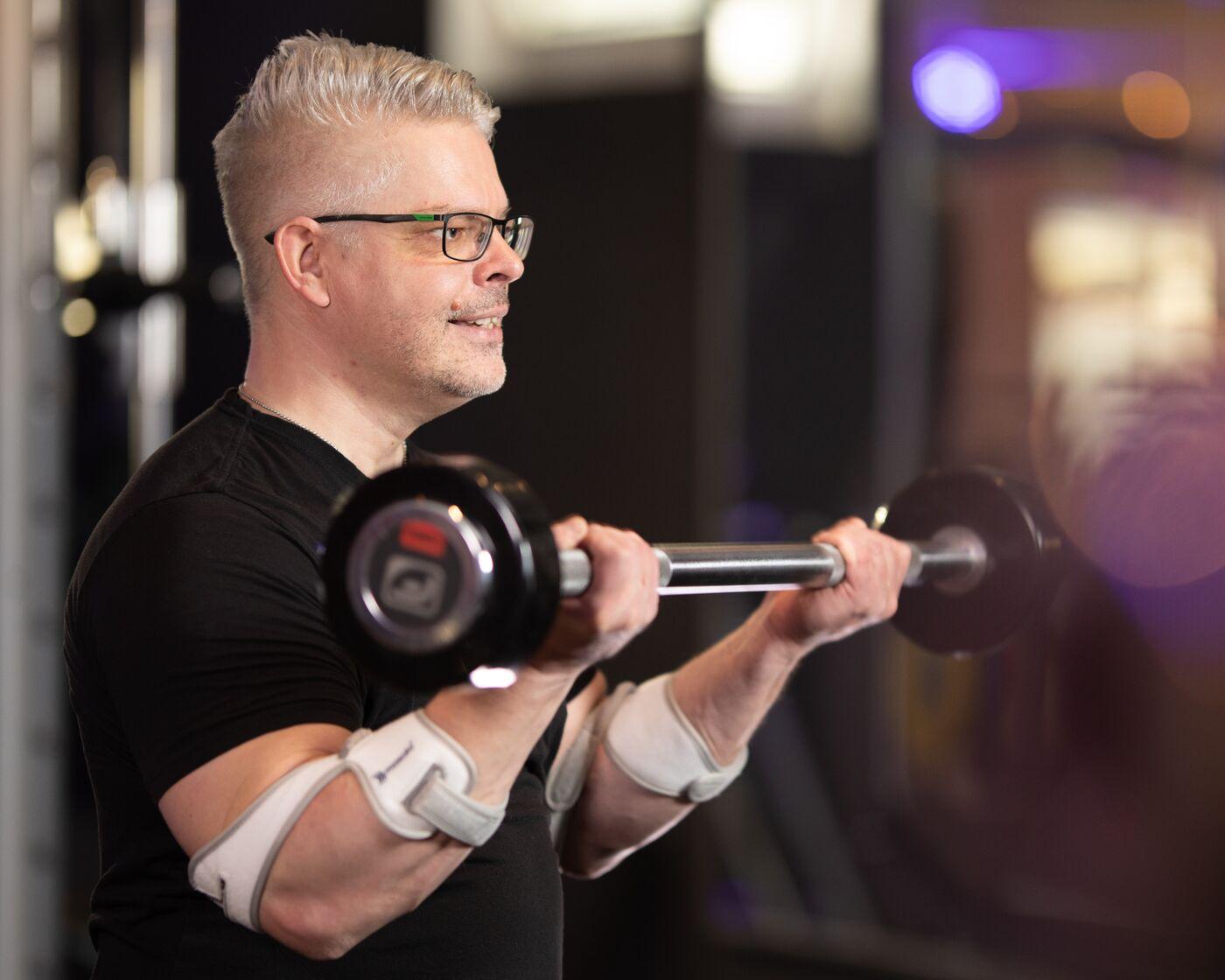
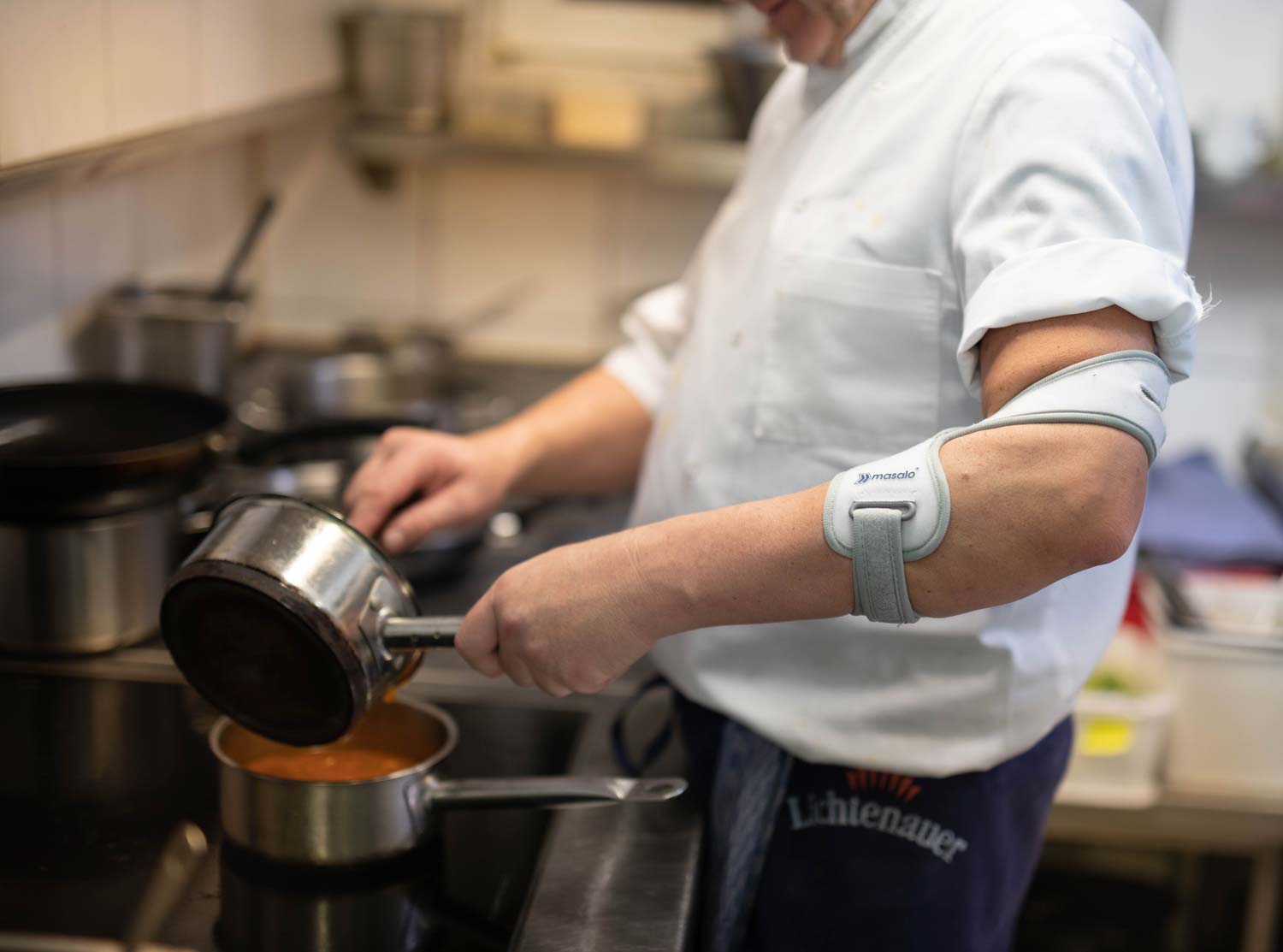
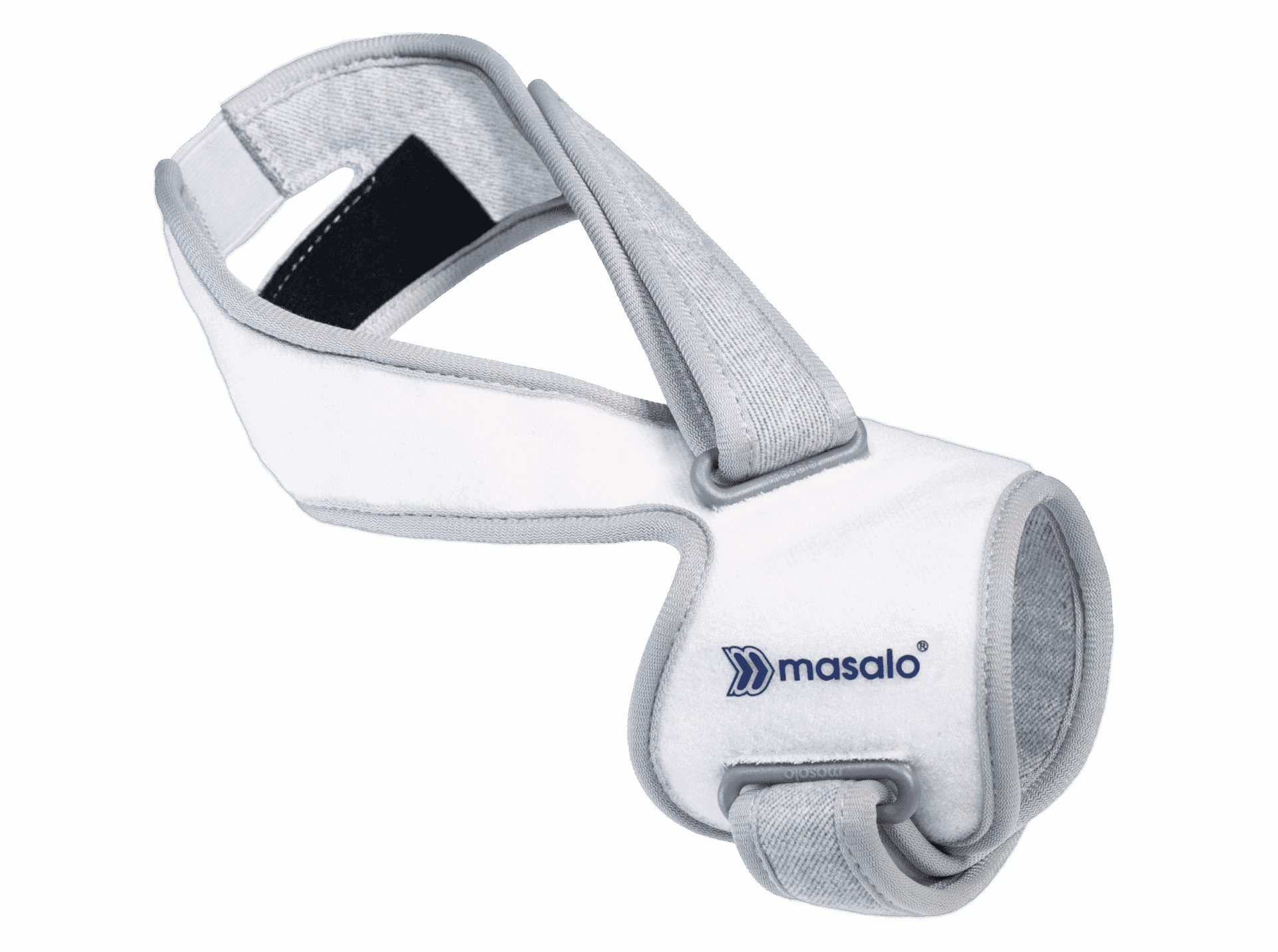
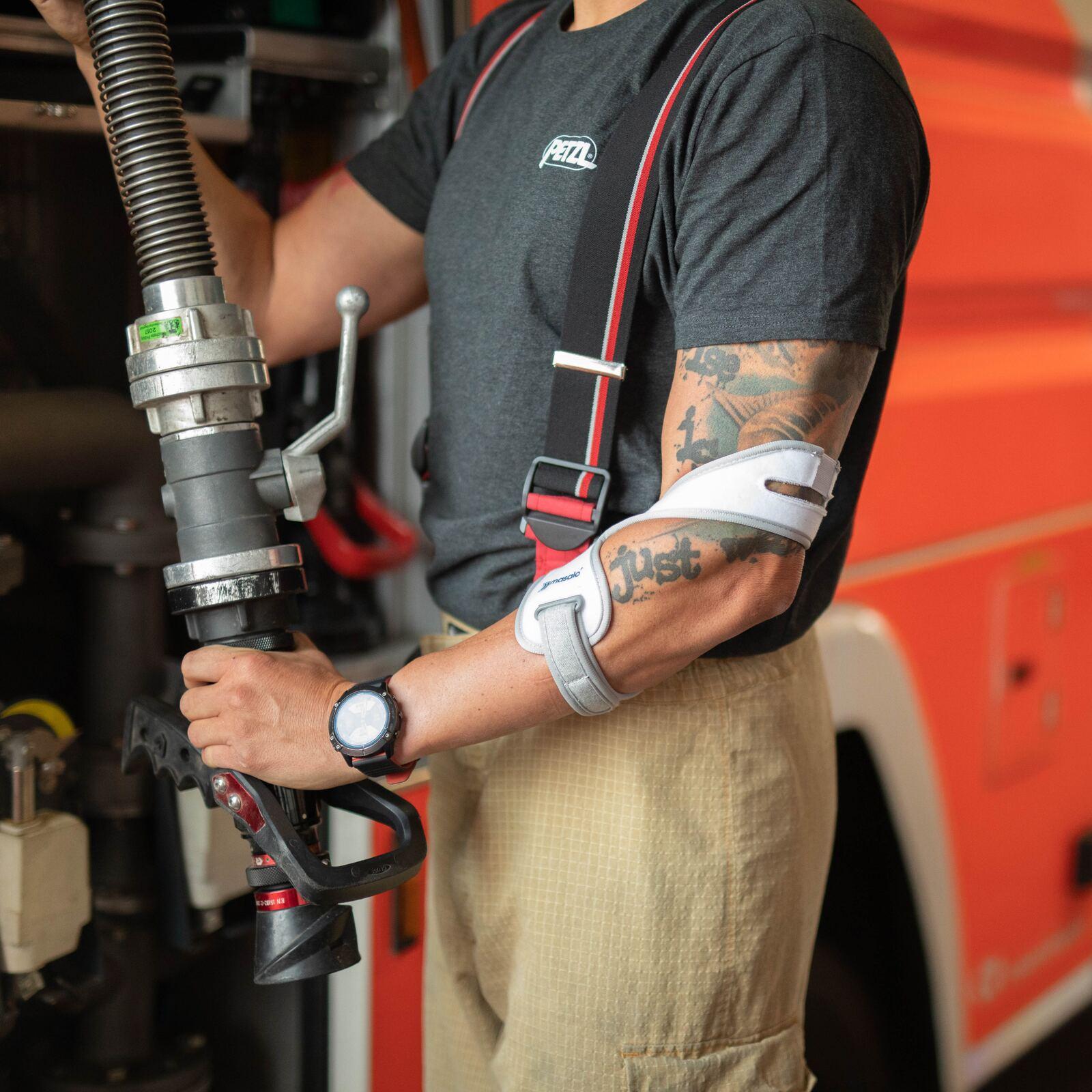
The Masalo Cuff MED consists of a forearm cuff and an upper-arm strap, connected by a patented design. A silicone strip and hook-and-loop fasteners provide grip and adjustability.
Contents
Key points at a glance
- Forearm cuff: sits in the middle of the forearm, firmly in place but without constricting.
- Upper-arm strap: sits just above the elbow and takes up the redirected pulling forces.
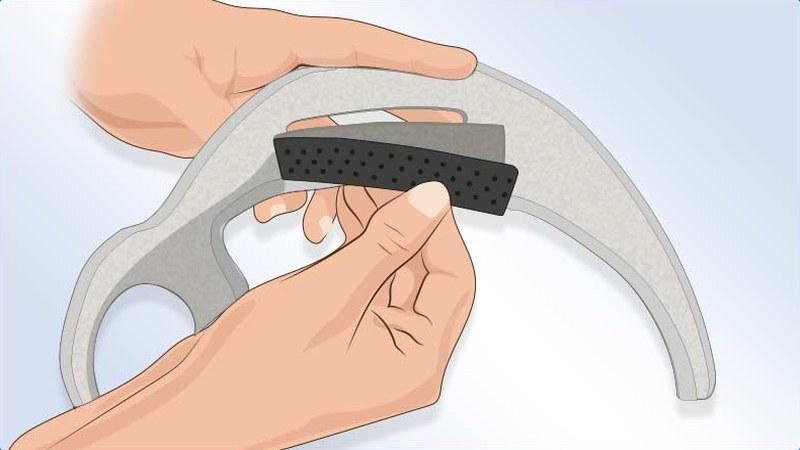
- Silicone strip: designed to stop the strap from slipping; can be repositioned and removed.
- Hook-and-loop fasteners: infinitely adjustable – this is how you set the strength of the counter-traction.
- Separate versions for the left and right arm, each in two sizes.
The components at a glance
| Component | Where it sits | What it does |
|---|---|---|
| Forearm cuff | Roughly in the middle of the forearm | Absorbs the pulling forces of the forearm muscles |
| Upper-arm strap | Just above the elbow bone | Takes up the redirected pulling forces |
| Silicone strip | Inside the upper-arm strap | Designed to stop the strap from slipping |
| Hook-and-loop fasteners | On the forearm cuff and upper-arm strap | Secure both parts and make them infinitely adjustable |
| Plastic loops | On the forearm cuff | Guide the straps when fastening |
Forearm cuff: the anchor point
The forearm cuff is positioned roughly halfway between the hand and the elbow and fastened with the hook-and-loop fastener so that it sits firmly in place without constricting. Keep at least two to three finger widths of distance from the crook of the elbow. A small dot on the inside of the cuff, where the upper-arm strap joins the forearm cuff, serves as a guide: it lines up with the centre of the crook of the elbow.
Several layers of tested textiles, padding and high-tensile functional materials are designed to make the cuff comfortable to wear. Our illustrated fitting guide shows you how to put it on, step by step.
Upper-arm strap: where the counter-traction ends
The upper-arm strap is passed over the elbow and, with the arm bent, fastened just above the elbow bone so that it fits snugly against the upper arm. When you move your arm, the cuff as a whole creates counter-traction, and the pulling forces are redirected to the strap. The principle behind this is explained on the page about the counter-traction principle.
If the strap sits too far towards the shoulder, it restricts movement or slips. As a rule of thumb: when your arm is bent at about 90 degrees, the cuff also forms an angle of roughly 90 degrees.
Silicone strip: keeping the strap in place
Inside the upper-arm strap there is a small strip with silicone nubs, attached with hook-and-loop fastening. Together with the patented design, it is intended to stop the strap from slipping – even with a slightly looser setting. You can change its position depending on the activity, or remove it. If you do, please keep it somewhere safe.
Hook-and-loop fasteners: you decide the strength
Both parts are closed with high-quality, very durable hook-and-loop fasteners. These let you adjust how strongly the counter-traction acts: the tighter the upper-arm strap, the earlier it sets in as you straighten your arm. With a very tight setting and extreme strain, the fasteners may occasionally come undone. This is intentional, so that circulation is ensured at all times.
You can read how to adapt the setting for work, sport or night-time in our everyday tips.
Left, right and two sizes
The cuff is specifically shaped for the left arm and for the right arm. It comes in two sizes according to forearm circumference, measured at the widest point with the arm slightly extended: size 1 under 27 cm, size 2 from 27 cm. When ordering the Masalo Cuff MED, please make sure you choose the right size and arm side.