
Comparison
Epicondylitis Clasp or Tennis Elbow Brace with Counter-Traction? The Differences at a Glance
Most epicondylitis clasps and tennis elbow braces work with compression, i.e. pressure on the forearm. The Masalo Cuff MED uses counter-traction instead – here you can see how the two principles differ.
Contents
Key points at a glance
- Clasps and typical tennis elbow braces usually work with compression.
- The Masalo Cuff uses counter-traction: pulling forces are redirected to the upper-arm strap.
- Compression products usually for no more than 6–8 hours – the cuff continuously, even at night.
- Which principle suits you is best discussed with your doctor.
How does an epicondylitis clasp work?
Epicondylitis clasps and many tennis elbow braces, splints and orthoses work on the compression principle: they apply pressure to the forearm. Designs vary widely – from narrow clasps to supports covering the whole elbow, with or without a pelotte (pressure pad). What they have in common is the pressure.
How does the Masalo Cuff work?
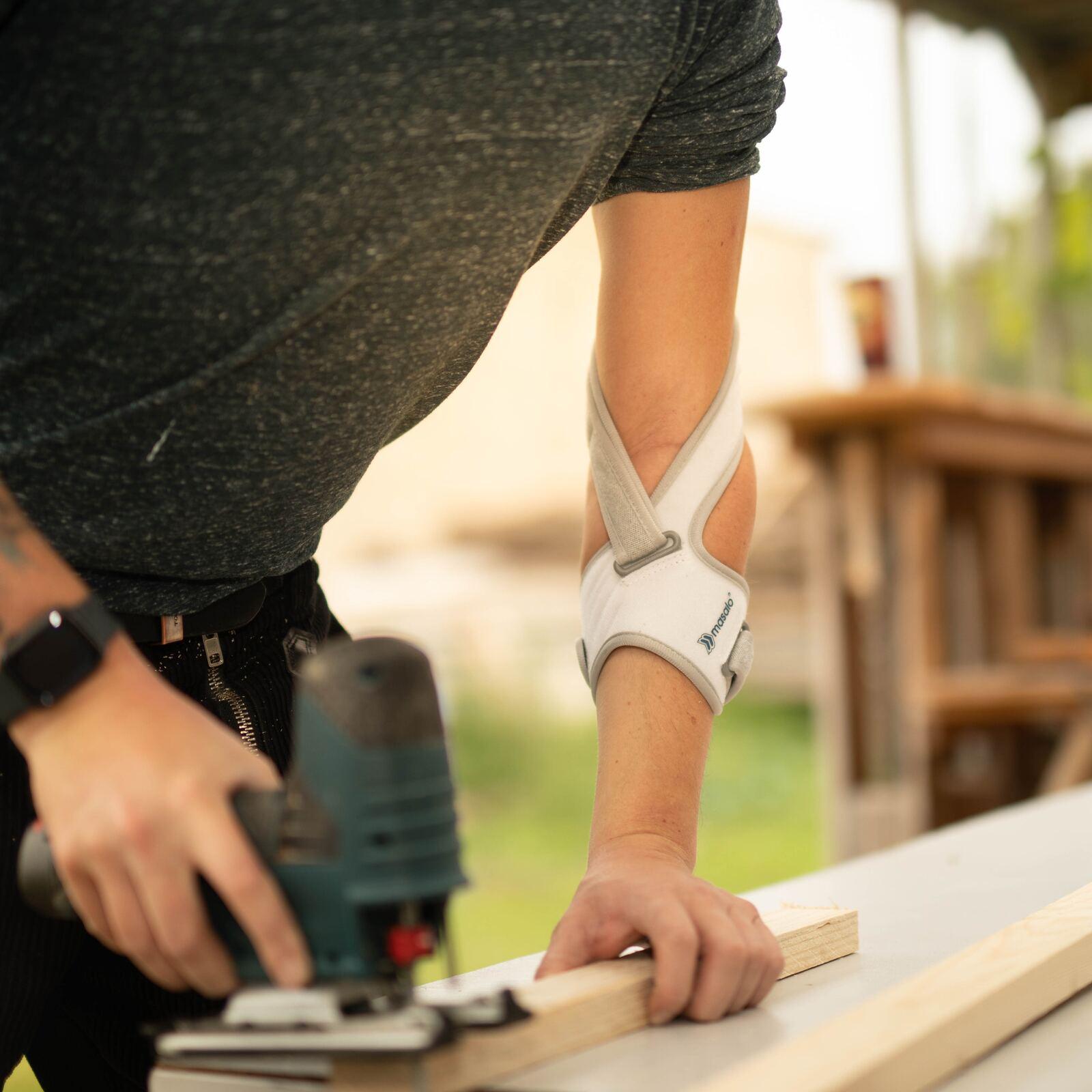
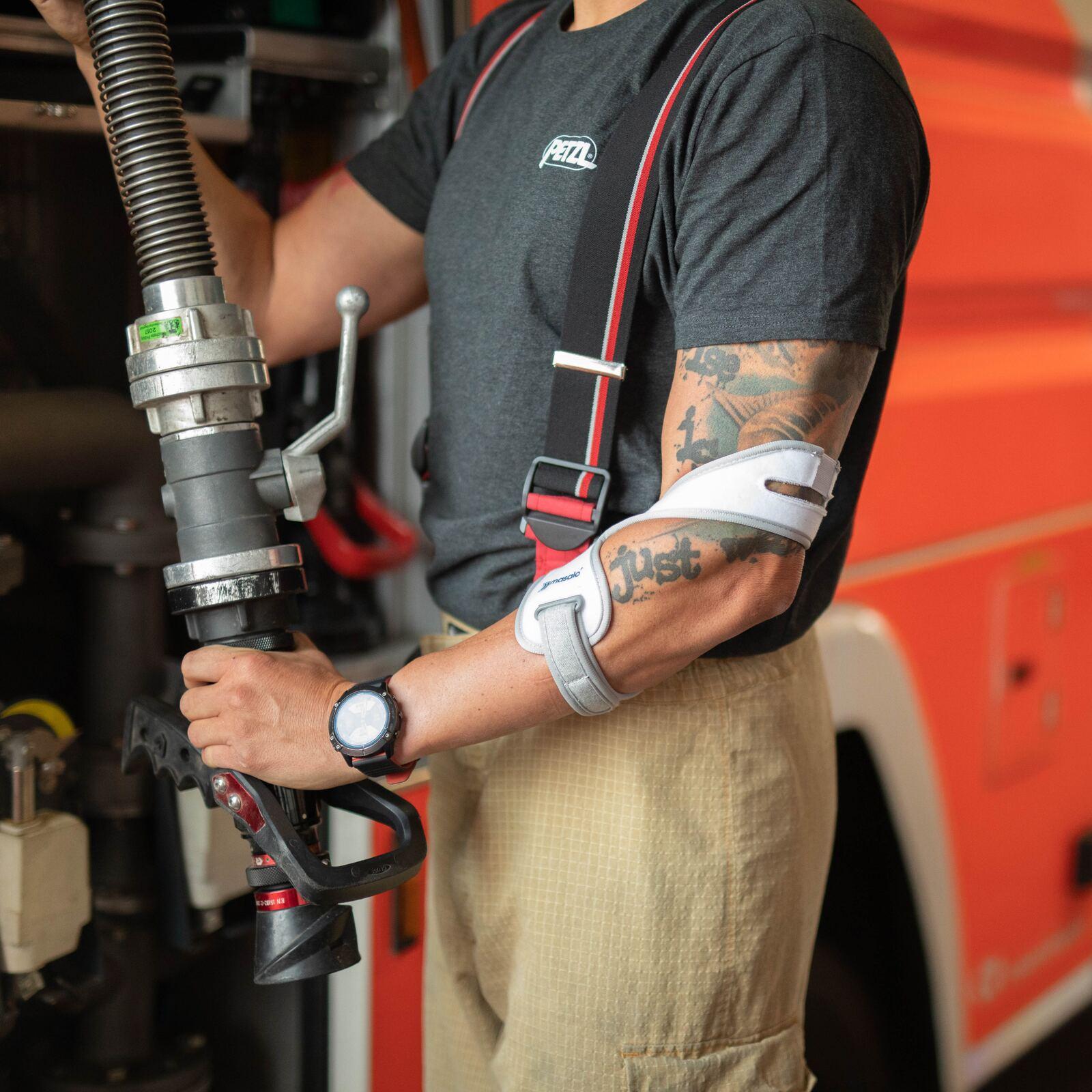
The Masalo Cuff does not rely on pressure; instead, it targets the pulling forces themselves. A forearm cuff in the middle of the forearm is connected to an upper-arm strap by a patented design. When you move your arm, counter-traction is created: the pulling forces are redirected to the upper-arm strap, and the tendon attachments are relieved.
Explained in detail: How the counter-traction principle works. Which part does what is shown on the page about how the cuff is constructed.
Clasp and counter-traction support compared
Principle
Clasp / compression support
Compression: pressure on the forearm
Masalo Cuff MED
Counter-traction: the pulling forces are redirected to the upper-arm strap
Wearing time
Clasp / compression support
Usually no more than 6–8 hours at a time, to avoid circulation problems
Masalo Cuff MED
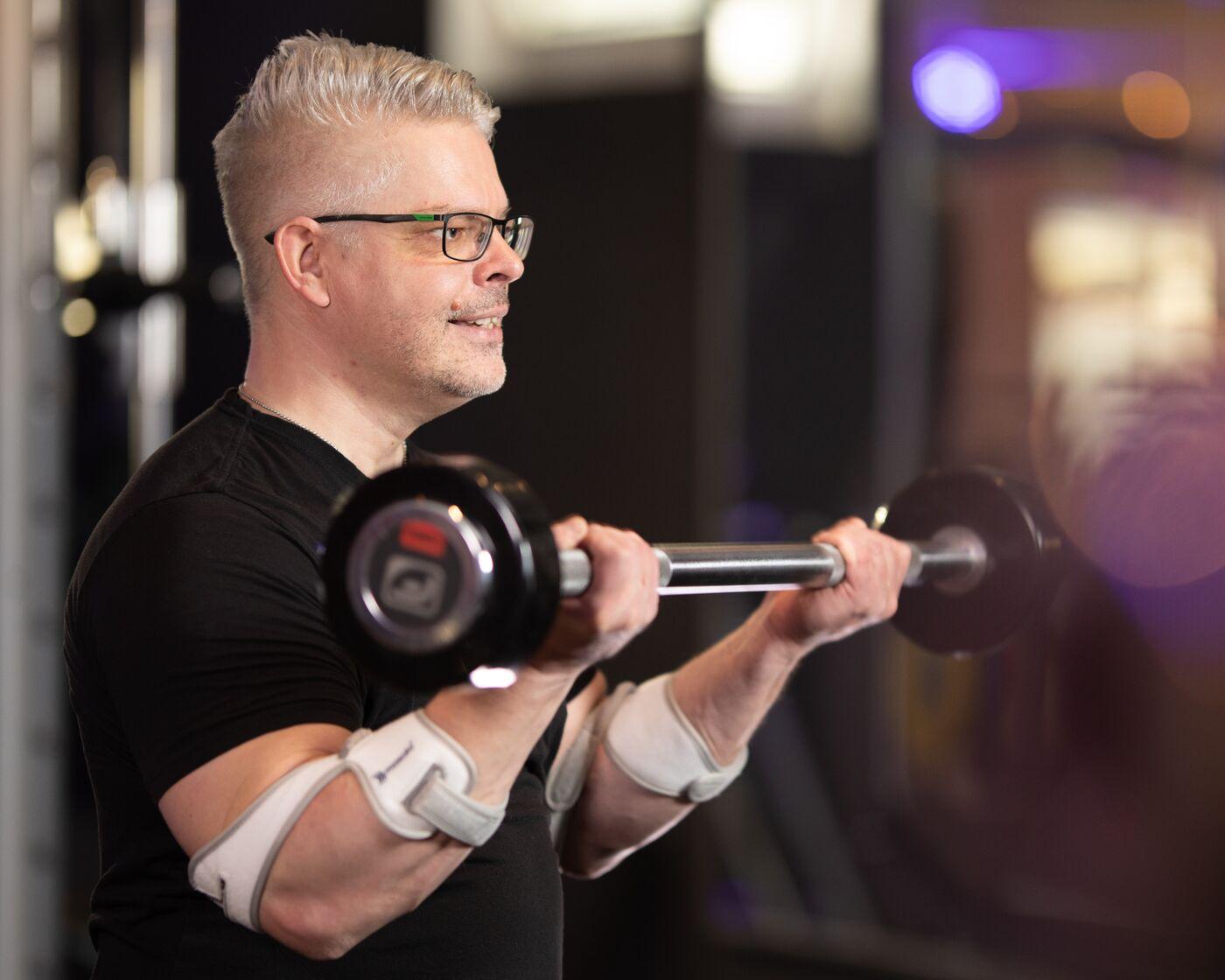
Can be worn continuously, around the clock – at night, in everyday life, while swimming, during sport and at work
- Principle
- Compression: pressure on the forearm
- Counter-traction: the pulling forces are redirected to the upper-arm strap
- Wearing time
- Usually no more than 6–8 hours at a time, to avoid circulation problems
- Can be worn continuously, around the clock – at night, in everyday life, while swimming, during sport and at work
What sets the Masalo Cuff apart in everyday life
- At night too: circulation is not impaired, so the cuff can be worn around the clock.
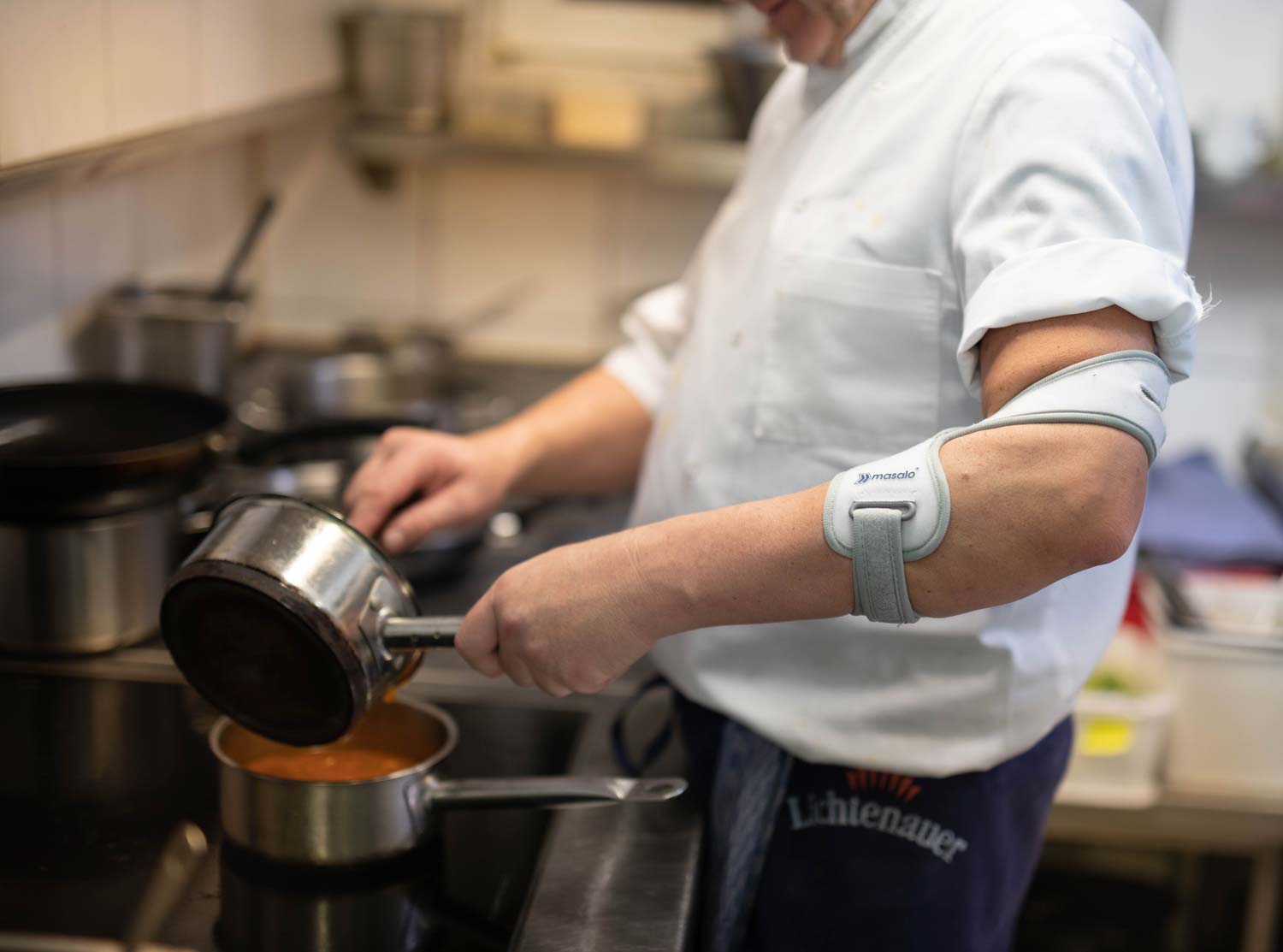
- Washable: suitable for professions with high hygiene standards, for example in nursing and care, hospitals, nurseries or catering.
- In the water: can also be worn while swimming, surfing or stand-up paddleboarding.
- Discreet: fits under a shirt and other clothing.
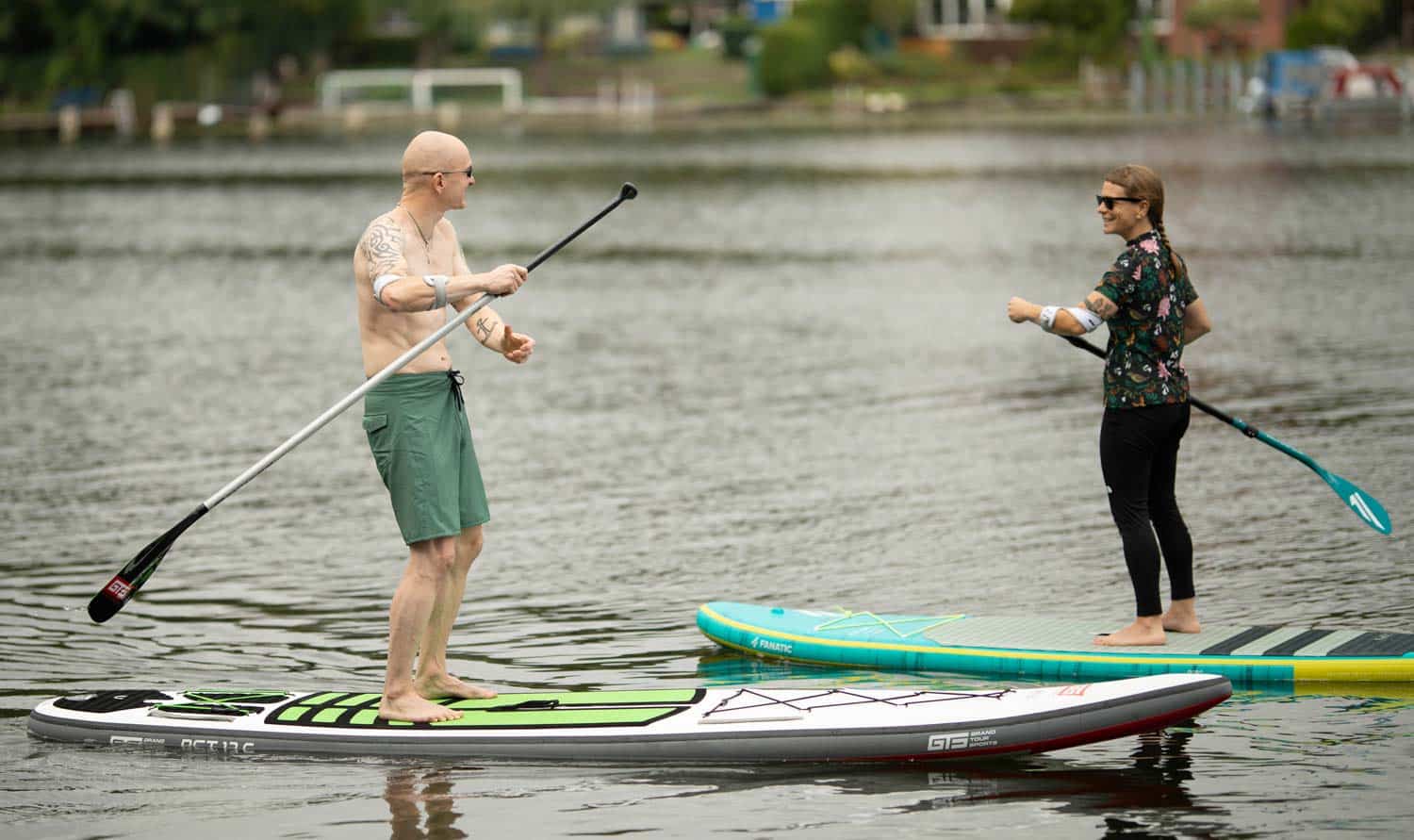
You can read how to adapt the setting to different situations in our everyday tips.
Clasp or cuff: which suits me?
There is no aid that works the same for everyone. Which principle may be suitable for your symptoms is best discussed with your doctor. The Masalo Cuff MED is a medical device.
You can check in advance with a simple hand grip whether the counter-traction takes effect for you: Who is the Masalo Cuff suitable for?