

Areas · Elbow
Elbow: relief for tennis elbow, golfer's elbow and mouse arm
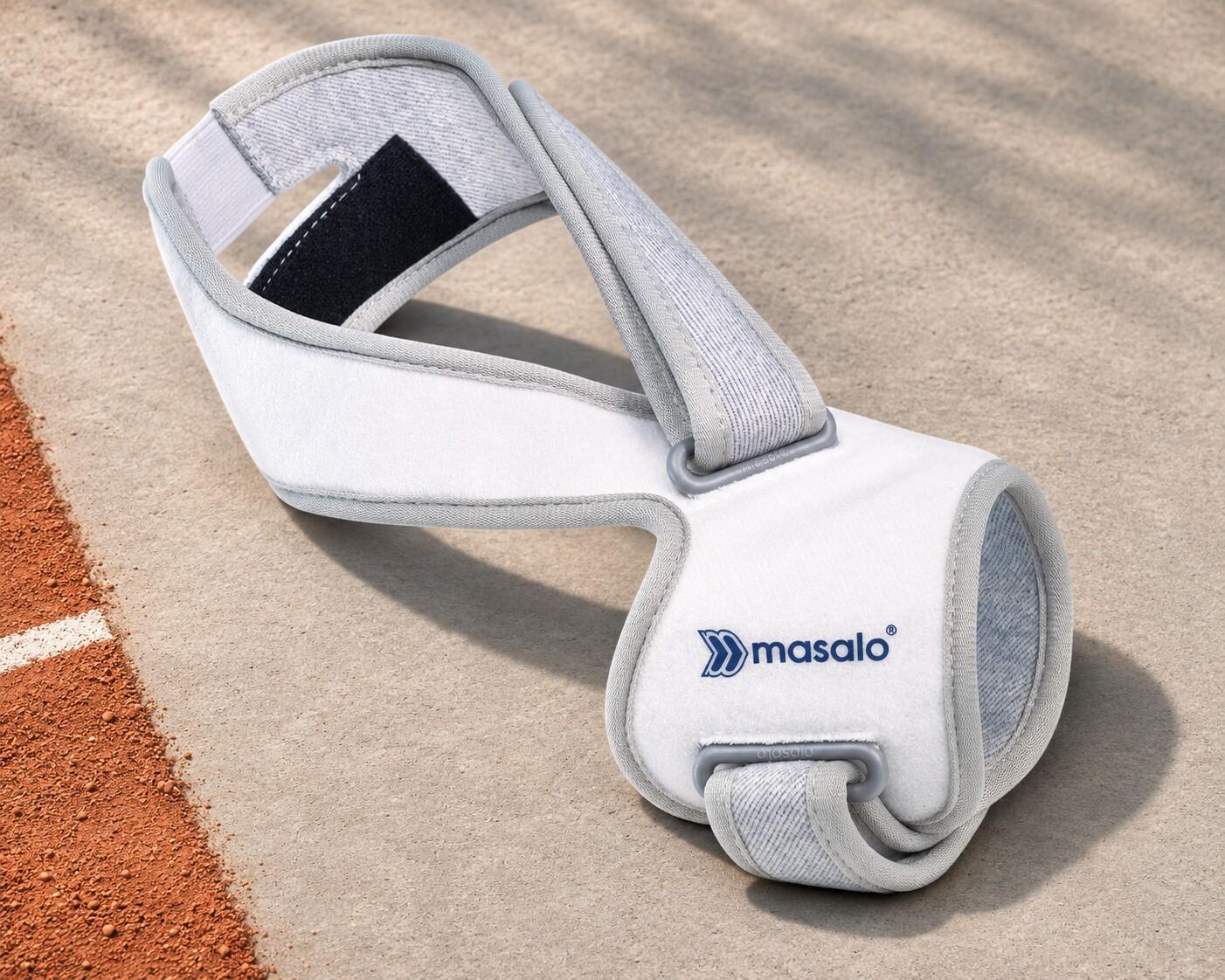
With epicondylitis, the forearm muscles pull on the irritated tendon attachments at the elbow with every grip. The Masalo Cuff MED targets these pulling forces – with counter-tension instead of pressure.
Orientation
What helps when?
A first overview. Whether an aid is right for you is best discussed with your doctor.
- 01Pain on the outside of the elbowTypical of tennis elbow: the discomfort sits at the outer bony prominence and often shows when gripping, lifting or turning.
- 02Pain on the inside of the elbowThis is how golfer's elbow usually presents. The cause is the same: pulling forces of the forearm muscles on the tendon attachments.
- 03Lots of mouse and keyboardWith mouse arm, small, constantly repeated movements strain the tendon attachments. The cuff can be worn at the desk, too.
This content is for general information only and does not replace medical advice.
Our selection
Size
Support is a question of fit.
Measure your forearm at its widest point, with your arm slightly extended. Under 27 cm, size 1 fits; from 27 cm, size 2 (up to approx. 37–39 cm). Then choose the arm – left or right.
cm
| Size | Forearm circumference |
|---|---|
| Size 1 | under 27 cm |
| Size 2 | from 27 cm |
Size 2 fits up to approx. 37–39 cm forearm circumference. For very muscular forearms there is a strap extension – please ask us.
How it works
Counter-tension instead of compression – step by step
This is how the Masalo Cuff MED works. Scroll through the three steps.
- 1Pull at the elbowWith every movement of the arm and hand, the flexor and extensor muscles of the forearm pull on their tendon attachments at the elbow.
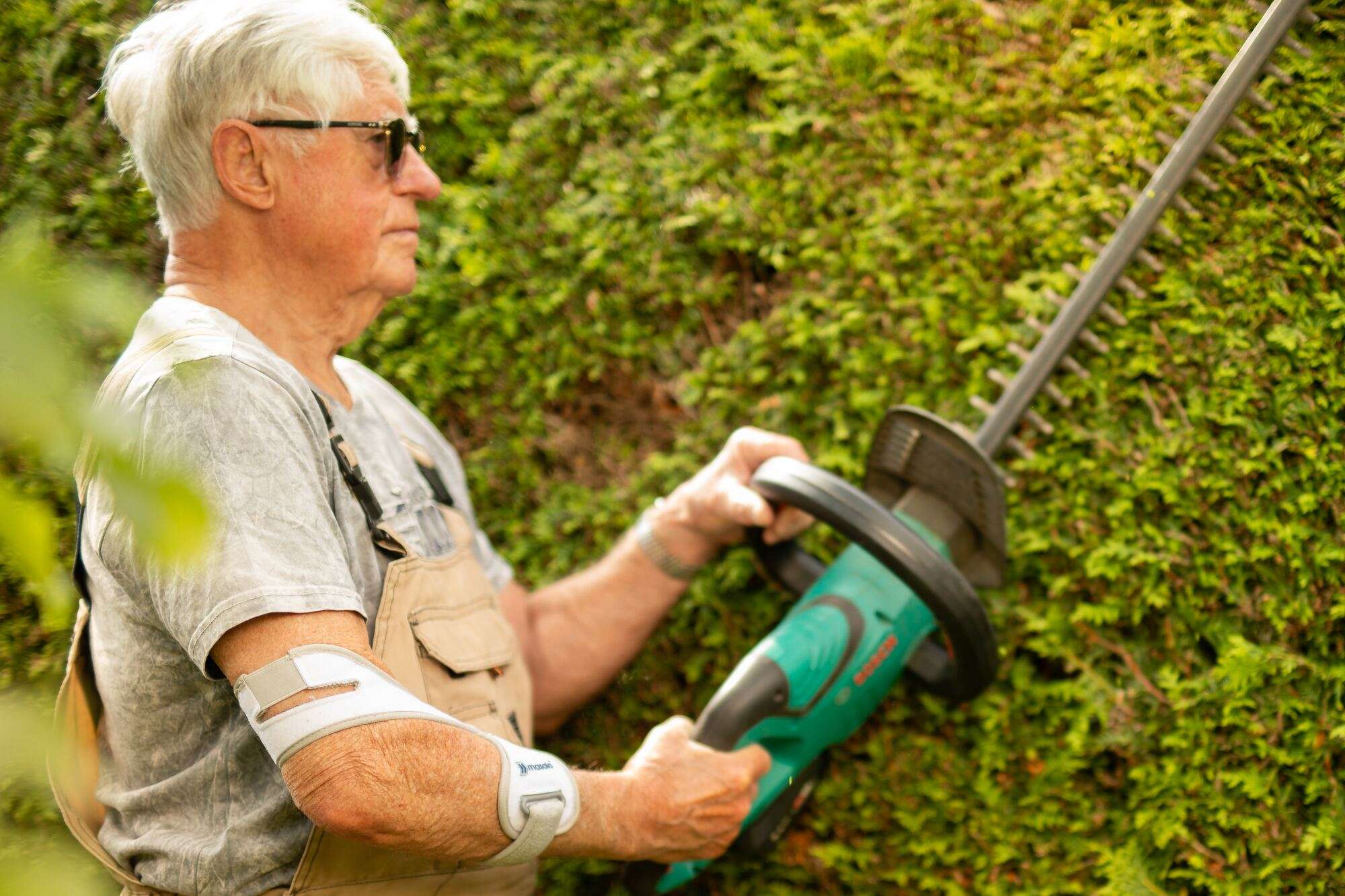
- 2Cuff on the forearmThe forearm cuff sits roughly in the middle of the forearm – firmly in place, but without constricting. It absorbs the pulling forces of the forearm muscles.
- 3Redirected to the upper-arm strapWhen you move your arm, the Masalo Cuff MED creates counter-tension. The pulling forces are redirected to the upper-arm strap, and the tendon attachments are relieved.
Fitting
How to put the cuff on correctly
The manufacturer's instructions in four steps. Take your time the first time – the exact fit is what makes the relief possible.
 1Slip the cuff over your hand. The small dot on the inside of the cuff – where the upper-arm strap joins the forearm cuff – lines up with the centre of the crook of the elbow. It is only there for alignment.
 2Close the forearm cuff roughly in the middle of the forearm: firmly in place, but not too tight. Keep at least two to three finger widths of distance from the crook of the elbow.
 3Slide the upper-arm strap over the elbow onto the upper arm and bend your arm.
 4In this position, adjust the upper-arm strap so that it sits snugly on the upper arm with the arm bent – only then close the hook-and-loop fastener.
Fitted correctly, your arm can only be extended with some effort. Never close the upper-arm strap with your arm extended – it will then be too loose, slip and have no effect.
Comparison
Counter-tension cuff or epicondylitis clasp?
FeatureClasp / compression supportMasalo Cuff MED
- Principle
- Compression: pressure on the forearm
- Counter-traction: the pulling forces are redirected to the upper-arm strap
- Wearing time
- Usually no more than 6–8 hours at a time, to avoid circulation problems
- Can be worn continuously, around the clock – at night, in everyday life, while swimming, during sport and at work
Your benefits at artosana
Good advice takes expertise.
- Advice with manufacturer know-howWe know our products, have been trained by the manufacturer and are in regular contact with Masalo KG. We are happy to advise you personally and free of charge on fitting and use – ideally with photos of your arm.Request advice with a photo →
- Fit promiseIf the size doesn't fit, we exchange it: you send it back, we send you the right size free of charge.
 Official Masalo partnerOriginal goods straight from the manufacturer Masalo KG – we source every cuff directly from Masalo.
Frequently asked questions
Answers to the questions we are asked most often.
Which size of the Masalo Cuff do I need?
That depends on the circumference at the widest point of your affected forearm: under 27 cm, choose size 1; from 27 cm, size 2. The cuff can only fit properly if it is the right size. Size 2 fits up to approx. 37–39 cm; for very muscular forearms there is a strap extension – please ask us.
How long and how often should I wear the cuff?
We recommend wearing it day and night if possible for the first two weeks. After that, wear it regularly, especially under strain, until your symptoms have subsided. As epicondylitis can be protracted, a wearing period of four weeks to six months is normal.
Can I wear the Masalo Cuff at night?
Yes – in fact, this is recommended, at least for the first one to two weeks. While you sleep, you do not control your movements and may prop yourself up on your arm. At night, the upper-arm strap can be a little looser, but the counter-traction should remain noticeable when you straighten your arm.
Can I work and do sport while wearing the cuff?
Yes. The cuff does not immobilise your arm – you should move and use it as normally as possible. For work or sport, set the upper-arm strap a little tighter, and looser during quieter periods. Always pay attention to your body's pain signals.
How do I wash the Masalo Cuff?
Wash the cuff by hand at 30 °C with a standard detergent that does not contain bleach. Close the hook-and-loop fasteners beforehand. Dry it away from direct heat and never in a tumble dryer.
The cuff doesn't fit – can I exchange it?
Take the cuff off and, before sending anything back, please contact us via our contact page with the keyword “Exchange”. If it does not seem to work, feels too tight or you can straighten your arm without resistance, it is usually just adjusted incorrectly. Measure your forearm again to be on the safe side – we will then help you find the right cuff.
Can I return the cuff?
Yes. You have a 14-day right of withdrawal from receipt of the goods. Please notify us of the return in advance via our contact page – no return label is included in the parcel, and you bear the cost of the return. You can find all the details in the Cancellation Policy.